Taylor Wagon
Welcome back to the CTEK ERP Build Your Way podcast. My name is Taylor Wagon and today I have with me...
JP McDaris
JP. John Paul McDaris.
Taylor Wagon
JP McDaris with Entrada Group, who has agreed to join us.
By way of background, I was just trying to explain how you and I met each other originally. Literally, it's just because we sat next to each other at, like, a million trade shows, right? The Milwaukee Wire Harness Show. Year after year, we ended up next to each other. That's actually how we got to know each other.
JP McDaris
That's right. Well, and obviously the famous Albuquerque. The word Albuquerque.
Taylor Wagon
So, yeah, background there. I grew up in, I guess, Wisconsin through elementary school and then moved to the wonderful city of Albuquerque, New Mexico, for middle school and high school.
Actually, you and I have had beer in Albuquerque, catching up on the old hood there. I'm in Austin now and have been for 28 years or whatever. And that's your old stomping grounds as well. So we cross over a lot of places.
JP McDaris
That's right. We know the good places to go. I think that's what it is.
Taylor Wagon
All right, so we have a recurring bit here on the podcast where I start out with a little book and recommend a book to the crowd. It's a real kind of Reading Rainbow vibe.
The book I picked today is right here. It is The Making of the Atomic Bomb. I don't think I've done this book on the podcast yet. It is a favorite of mine. It is Silicon Valley canon. Everybody likes to read this.
This is a book I didn't want to read and it was recommended to me. Because I lived in Albuquerque, I'd already been to the museum, the bomb museum. You know tons of people who work at the national labs. My father-in-law worked at the national labs. It just felt like old history.
I was like, man, I don't want to read a bomb book. I've already read a million bomb books. And this book is awesome.
I finally read it and I was like, wow, that was so good. I think this would make my top five history books. It's that good in terms of them overcoming the difficulties, the engineering and science challenges, the whole story. It's fantastic.
So, great little book about making things.
Anyway, here we are. Other things I just have to get off my chest today.
I'm wearing kind of flesh tones. I've got this pink CTEK shirt on and I've got these vaguely... they're linen pants, but they have a little bit of a rose color to them. Kind of an odd color.
It was pointed out to me this morning that they have a hole in the butt. Once somebody tells you that, your whole day is transformed.
JP McDaris
It's very transparent.
Taylor Wagon
You walk around and something in the back of your head is like, man, I've got a hole in my butt right now.
JP McDaris
I know how that goes. I have this habit of owning Levi's for about nine or 10 years and it's basically what eventually happens to all my pants. They kind of blow out the back.
I love old, broken-in Levi's. It's the hardest thing, trashing them and having to go buy a new pair for three times the cost because of inflation, shrinkflation and then breaking them in again.
Yes.
Taylor Wagon
Yeah.
JP McDaris
Which is pretty fascinating. I don't know when the last time you bought a pair of Levi's was. Obviously, I was not born when they were massively produced in the United States.
I would say growing up, the tags would all read China. But I've been amazed since COVID, in the Levi's products that I've bought, whether they're denim shirts or jeans, where they've been made. Now they say Philippines. They say Vietnam. They say Indonesia. Nicaragua has a big Dockers operation where they're sewing Dockers, cut and sew.
To me, that's the first thing I do when I buy something, especially something like a pair of Levi's. I want to know where it's made.
And I don't know if you saw what they did to Levi's Stadium, but as a marketing guy, I literally just wanted to make a pair of white-label jeans that had the label washed out.
Yeah, with just white draped over it.
Taylor Wagon
That was great.
JP McDaris
Or just a shirt that had the outline with something draped over the top.
Taylor Wagon
Oh yeah, a little cloth. Maybe you could even sew on a little cloth flap to cover it. I think they did a great job there. All right, so the company you're with is Entrada Group.
JP McDaris
Yes.
Taylor Wagon
And this is obviously relevant to where your Levi's are made because Entrada Group gets to... I'm going to let you pitch yourself here. Entrada Group does...
JP McDaris
Entrada Group, the 13-second elevator pitch: Entrada Group offers a manufacturing platform for manufacturers who need to set up or start up a cost-effective solution within the country of Mexico.
So what is a cost-effective solution? We've gone through so many slogans, right? Or so many sayings. Manufacturing platform, base of operations, turnkey solution.
Taylor Wagon
What are the words that let people really understand the idea here?
JP McDaris
I think sometimes Doug and I love to start... Doug, owner of Entrada Group, a partner, my direct boss, was the VP of Business Development. You've known Doug as well, sitting in the booth.
What I think is amazing about our two companies and why I would always work for a company like yours or mine is that the owner sits in the booth. Not many companies do that.
The thing we hate to be compared to are consultants. A lot of what we have to do for the startup and helping companies, everything is free right off the bat.
We're doing cost models. We're touring companies through Mexico, going to visit our existing clients' operations, going through other different operations that may have some similarities in processes, doing bill of material research and basically what we call taking someone's BOM, tearing it apart and finding out what potential tariffs and duties are going to be when they bring it into Mexico.
Because Mexico has its own...
Taylor Wagon
That's right.
JP McDaris
...import-export regime. So a lot of what we do at the onset seems like consultant work, but at the end of the day it's really trying to build a relationship.
This is a huge investment that companies have to make in a country that does not have the best reputation. When you say, "What does Entrada Group do?" Literally the biggest thing I tell someone is, "I sell Mexico."
I sell a country that has a lot of opportunities, bonuses and a lot of great things that can happen.
But it also has a very shaky reputation. A lot of people obviously have been concerned about cartel violence and all these different types of situations that realistically do not affect manufacturers in Mexico.
What I tell them they really need to be afraid of is basically Hacienda, or the Mexican IRS, and all of the compliance work. It's not just trade and compliance for logistics and import-export.
Their environmental safety and hazards are basically directly equivalent to OSHA. But the Mexican government loves to pin international manufacturers on it and make as much money as they possibly can because they know they've got you up against the wall, right?
You're an international company doing business in another country. You're going to pay. You're going to do whatever it takes to make sure that operation stays functioning.
Taylor Wagon
So let me ask a few questions about this.
First off, Mexico has a distinct tax and business status for companies that are manufacturing for the U.S. within, I don't know, 50 miles of the border, right? The whole maquiladora system, where we can have a factory just across the border and it dodges some of the tax liabilities.
How different is that as you move further into Mexico? What's the liability shift?
JP McDaris
Before NAFTA there was import substitution and originally the rule was, I think, 100 miles off the border you could establish. That's why you see so many companies that have existed in Mexico for up to 60 years along that border region.
It was extremely successful. That's sort of how Entrada Group's grandfather of the shelter industry, Shelter MEX, which is the license we operate under...
That's sort of where it started. You set up five miles across from El Paso in Juárez. I've got a cousin who knows a bunch of employees. Oh, it kind of sounds like an HR director. I've got a brother who owns a trucking company in logistics. Oh my gosh, there's the trade and compliance aspect.
I've got a guy who knows how to basically set up and help with machinery and has a forklift. So it all started as this cousin-brother, all these services that one could just sort of find under the umbrella of his family.
As NAFTA was signed, companies started coming deeper into Mexico for a multitude of reasons.
A lot of companies were looking because their OEM was set up further in Mexico. The cost of labor is more cost-effective because there are so many companies within that border region. Or, in some cases, you're selling directly into the domestic market. Monterrey is the third-largest domestic market.
And it's two and a half hours off the border. But then you've got Guadalajara with 11 million people pretty far off the border and then the giant, with 24 million people, Mexico City.
So how are you going to be able to supply them from the border?
As NAFTA was signed and companies were looking deeper in, there now became a need for a much more sophisticated set of services that can help manufacturers who are short on resources.
They've never set up an international operation before. They don't speak... I say they don't speak the culture, right? A lot of people speak Spanish. It doesn't mean that they speak Mexican culture.
Eventually, what developed from import substitution, or the maquiladora industry, is now equated to an IMMEX license, which is basically just a license that allows you to import and export.
Taylor Wagon
Okay, so the maquiladora situation, that's old news, in other words. That really has changed pretty dramatically.
JP McDaris
Correct. Correct.
Taylor Wagon
I'm dating myself.
JP McDaris
No, don't worry about that. You don't look a day over 30.
Taylor Wagon
Appreciate that.
Okay, so if I have a manufacturing company, what are the things where it becomes like, "Hey, I should really start looking at moving part of my operation into Mexico?"
Let's say I'm in central Iowa. What are the industries where that makes sense for some probably more than others? There are probably inflection points on size. Hey man, you've got three guys in your garage, probably don't want to replace two of those guys with an operation in Mexico.
But at what point does that make sense? And what are the things where you would say, "This is a great candidate. We really want to talk to these people," versus, "No, don't talk to us"?
JP McDaris
The only cost savings in Mexico, which realistically, when companies are maybe leaving Asia or whatever they're doing... the reality of Mexico is everything costs about the same as it does in the U.S.
Machinery, MRO, all the material that you're going to buy, in some cases, might be slightly more expensive because you have to pay the markup on the importation.
The cost of labor, that's the real savings.
And in some cases, it's not even the cost of the indirect labor. The engineers, process engineers, higher-level technicians and plant managers, they're on par with what it costs to find someone like that in the U.S.
It's more about the direct labor, which now means companies like wire harness manufacturers, companies that have very labor-intensive processes. That's where Mexico starts to make sense.
As an example, our largest company is 2,200 employees. They have their wire harness, wire and cable harnessing for the automotive industry.
Our smallest client is right around 30 employees. Oddly enough, they're doing wire harnessing as well, but it's just a newer company that has only been with us in Mexico for two years.
One of the companies I love to talk about is Axiom St. Croix. Those of you who love to fish, they're a fishing rod manufacturer.
It's the first rod that was made in Mexico and out of China. It was being subcontracted in China. They sell to big-box stores.
One day, the owner at the time showed up to Bass Pro Shop and they said, "We received a Chinese rod that looks exactly like the rods we've been buying from you."
So not just medical device, not just aerospace industries, but intellectual property is always a big thing, even in recreational consumer products.
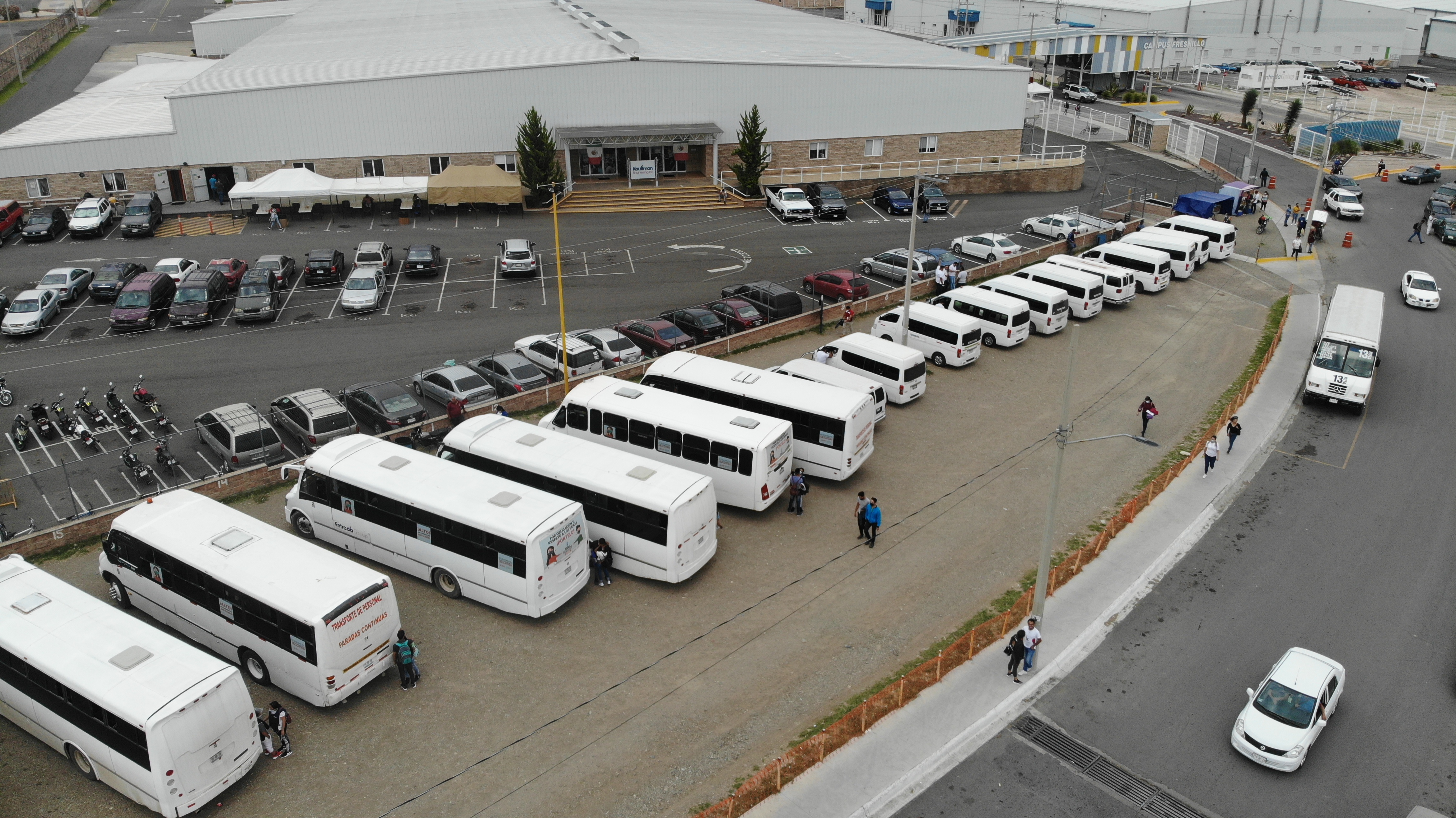
These rods now, they make about 9,000 rods a week in Fresnillo, Zacatecas. These are all handmade.
I love to talk about it because it's actually more of an art. You're finding somebody in the middle of Mexico who has never fished before in their life and now they're making a fishing rod. The quality standards with which these things have to be developed...
It's pretty fascinating to see how these rods are done and the artistry, and how people get incentivized based upon the quality of the work, not just how many they make. They're incentivized based upon the quality.
Taylor Wagon
How did they pull off that shift into quality? It's interesting. Some of that's weird cultural values, but if you're not exposed to the world itself, even in a niche world like fishing, to be able to evaluate what is special about this...
I remember talking to... There was a period in my life where I did a lot of research into hotels and the hospitality industry.
I wrote a business plan for a hotel and just dove into that at some point.
I remember talking to somebody and they had known a couple who moved out and started a safari lodge, an extremely high-end safari lodge in South Africa. Their labor pool obviously had zero history, affiliation, awareness or exposure to what a luxury traveler would expect.
So what they did, the couple that was starting this hotel, is they got their founding employees and had them stay at the hotel.
I assume they had to do it in shifts because it wasn't a large hotel and they needed it to be very personalized on the attention front. They had them stay there for a couple nights with their families and they provided the hospitality service to these up-and-coming employees.
So they would realize, what is it like to have somebody anticipate your needs? What is it like to have somebody hovering just behind, watching what you might think you want and always being there anticipating it?
They tried to build that in there. That's the anecdote my head goes to when I think about, how do you build that into somebody?
JP McDaris
Training and obviously the training system, the training program. I think humanizing the processes.
I've toured the Volkswagen plant in Mexico, which has about 14,000 employees. I've been through the GM plant in Silao, which has 9,000 employees. I love automotive. Mexico has cut its teeth on automotive.
At the end of the day, a lot of these companies love the training, the implementation, the Kaizen of the Japanese automotive groups. But then they have to take it and humanize it and scale it down a few levels.
While the automotive world is a lot of what I see, it's volume. It's basically low-mix, high-volume manufacturing, which a lot of my clients are not into.
Cross-training, having multiple platforms, incentivizing people upon that cross-training. So they're basically making more money with more...
Taylor Wagon
As their skills increase and they can work in different areas.
JP McDaris
Yeah. And I think in Mexico, what we find is people want more responsibility, not necessarily more money.
People there want to be able to have more titles or more acronyms behind their name. They really value that knowledge. I just think that's something I've learned culturally, one of the differences that I see.
Sometimes people want to be a part of a family. In Mexico, it's really hard to get people to work overtime.
You really have to schedule and plan everything because I lived eight years in Mexico and every weekend I was at a quinceañera, a wedding, a baptism, a graduation, whatever.
So trying to get people to come in on Saturday... They couldn't film the movie Office Space in Mexico because that line just wouldn't work.
Taylor Wagon
Yeah, it doesn't resonate.
JP McDaris
No. And I think that's the big thing. People spend a lot of time with their family.
But you realize when you're at work, especially a manufacturing operation, the legal workweek in Mexico is 48 hours. Our first shift is four tens and Friday is an eight, so it's an additional eight hours.
That's all changing coming up and I don't want to get into the whole detail of it. But at the end of the day, they say you spend more time at work than you actually do with your family.
So in Mexico we say, "Well, this better feel like family."
Taylor Wagon
Interesting.
So your ICP, ideal customer profile, is somebody with a manufacturing company in the U.S., probably a segment large enough, like 30-ish or more, that's going to be very labor-focused, right? Not highly automated.
That could be high mix or it could be repeatable, but it needs to be very hands-oriented.
How long does it take? If I said, "Hey, I'm a manufacturer. I've got 30 people. I've got very manual work..." Talk to me here. What else? How long does this take? What is expected? How do you figure out if it's going to work cost-wise or if it's going to be a wash?
JP McDaris
The cost model is a big aspect. We basically have a cost model questionnaire. We have an NDA in place. We get the cost model questionnaire and then we build it based upon the cost of our actuals from our existing clients.
You've got your indirect and direct labor. You've got the freight in there. You've got the cost of the rent of the facility, utilities, telecommunications, other fees, broker fees and other things that come up.
For an ongoing operational snapshot every month, we try to make this thing as comprehensive as possible. It includes our fee.
The only thing it doesn't include is MRO and raw material because our clients handle all of that.
So this cost model is sort of the telltale. A lot of times we tell companies, base it upon a line that you have in the U.S. If you've got this one business, this one line, let's do an apples-to-apples comparison.
We'll get it all the way down to what it costs all-in per hour. So broken down per hour, what does a 30-man, 50-man, 100-man operation look like?
We always want to do those three models because we want to show them what happens as they grow.
Like I said, if the real cost saving in Mexico is labor, you want to be able to amortize all the other costs against that labor. So you need to continually be growing that labor number.
We used to say in Mexico it made sense at 45 or 50 employees to come to Mexico.
I would say since COVID, inflation and the peso gaining value on the U.S. dollar, which really has nothing to do with the peso gaining value, it's more that we're trying to devalue our dollar, right now it probably sits around 65 to 70 employees as the sweet spot where you really break even and can start to see some gains.
Startup is a fun one because you're saying, "How long does it take?"
This is me putting on my sales cap. The fastest we've ever started up a harness company out of Chicago was 11 weeks.
The contract was finalized. We had already been searching for a plant manager. As soon as the contract was signed, the plant manager hit. We got them up to Chicago for training. We got them back in four weeks and we started the importation of the equipment.
We started the fit-out with all the electrical, local electricians. Everyone is doing compressed air lines, data, IT.
So from hiring the plant manager to shipping the first test product was 11 weeks. That was a screamer.
Taylor Wagon
Yeah, that's fast.
JP McDaris
And today that company sits at about 100 employees. They've been with us since about 2019.
Taylor Wagon
I've done some work in Mexican factories, mostly close to the border. Again, contract manufacturing stuff.
Usually it's a division of a U.S. company and they're pushing some amount of labor there. Often the compelling thing, sometimes it's the labor. Labor is good. Sometimes it's that they're actually going to be shipping somewhere in Mexico as well.
So the advantage there is, even if it was break-even on the cost front, just keeping it as close as possible to the point of use makes that a win on the freight side as well as just responsiveness. That part's always kind of interesting to me.
What do you guys do for... This is technically a software podcast. From a manufacturing standpoint, what kind of systems do people run?
I assume the ideal is, if it's a U.S. company, you want to just put them onto the same system their parent is on, right?
JP McDaris
It is. It's funny because there's a whole side that nobody thinks about.
The Mexican government has its own, it's called AduanaSoft. It's their own customs software. You have to pay like three grand, a one-time cost. You have to buy it from the Mexican government.
In other words, they can't necessarily piggyback onto ours. Every one of our companies has to have their own seat and then everything gets run through that to the Mexican government.
Taylor Wagon
So that's on the tax side, right? Sending the invoices, acknowledgments, all that e-invoicing?
JP McDaris
It's really weird because import-export and taxation, the Mexican finance and accounting side, they just lock.
They're literally the software programs that are from the Mexican government. They're talking. We're having to coordinate. That's a big part of what we do.
All of the inputting of information and data has to go and land on this software. There's the government side. There are a few different programs that a lot of people don't think about, so there are additional costs and expenses in training in that.
Then the other side of it is...
We have the good old-boy company. Twenty megs of internet service. Very basic. Probably not running an ERP system. Everything is just sort of logged in Excel spreadsheets and emailed.
Then our most sophisticated client has four global operations. The largest one is in Mexico. They're a premium speaker manufacturer for the X5 BMW, Tesla...
That weird speaker when you back up or go up to... that weird Jetsons-sounding speaker. They do the Q5 Audi and a couple other luxury vehicle speakers.
They're running a few different ERP systems. We have to have two one-gig, or basically the highest level of internet connection you can have possible. They have to be simultaneously running in case one goes down.
Taylor Wagon
So you have failover.
JP McDaris
And they're connected to China, they're connected to Belgium, they're connected to Detroit and then obviously Mexico.
So it just really depends on the level of sophistication.
Corporate culture is awesome. Europeans have the uniform. It's the uniform and the steel-toe boots and safety glasses, and you can eat off the shop floor.
But when it comes to the technologies that are running in these companies, this particular company has four KUKA robots that just apply glue to the speaker before the cone is put on.
And it's mandated by one of the German clients: "No human will put glue on my speaker. It has to be a robot."
So these robots are running and programmed from Europe and it's simultaneous.
I tell people Mexico has pretty good infrastructure. The most difficult thing today is electricity because of the number of companies that are moving in and the demand for energy.
Telecommunications... I started in Mexico in 2010 and in the last 16 years, it's day and night.
You and I would be on a Skype call right now. I'd be in Mexico and you might catch every other word, and we wouldn't have the video running.
It's grown a lot, but now there are more hurdles. I think energy right now is the biggest issue in Mexico.
Taylor Wagon
It's getting to be that way here as well. If you read the data center news, so far I think most of the grids are fine, but the demand is high.
JP McDaris
So really, levels of sophistication.
When we're talking about types of companies, we've gone from family-owned, owner-operated small shops to... We've worked for the company Meggitt Aerospace. They did braking systems for the Learjet, for Bombardier.
I'm talking like 40 machinists. Just some of the coolest stuff you've ever seen machined. Just top-notch, the way these operations are put together.
Taylor Wagon
So are you guys seeing... You mentioned that power is under demand. There are a lot of people moving into Mexico. Even with the peso-dollar issues, is it growing pretty rapidly despite some of those pressures?
JP McDaris
I would tell you post-COVID, there was a lot of new activity, new action and a very large amount of it was Chinese companies, right?
Taylor Wagon
Attempting to move around tariffs then?
JP McDaris
Okay, to try and get around tariffs. But probably the last three years, it's all existing company growth, internal growth.
So you've got companies that are already comfortable with Mexico. They're already established and now they're literally building another building, throwing another 200 people in there, hooking up another 500 KVA transformer and maybe they're shifting a line from another country or they're just expanding.
That's mostly what I see. It's not so much new foreign direct investment.
Taylor Wagon
It's existing companies expanding. Interesting.
We both identify as New Mexicans in the old Albuquerque. Albuquerque is a place that remarkably has very little manufacturing, very little manufacturing growth. It has some regulatory difficulties. But why do you think it is that it just never takes off in New Mexico?
JP McDaris
Well, I always laugh when I joke because I tell people, in New Mexico there's Jabil. Jabil is here, which is a massive contract manufacturer. Santa Teresa, right on the border of Mexico, has quite a few companies there.
But it's really funny. It's all Mexican management. They're importing people from Mexico to run the operations.
So the first thing I always point to are the skill sets. What types of programs are people taking at UNM and New Mexico State? It's engineering, agriculture, the med school, the law school.
I did an architecture degree, a bachelor's degree there.
I don't know what it is about New Mexico. We're in such an amazing position between California and Texas. We've got the border there to be able to get the subcomponentry, right? We have the weather for it. We've got the food for it. We have a lot of pluses.
And this is, as a New Mexican, the reason I moved back here. I've moved around a lot.
I lived in L.A. I lived in Phoenix, Los Angeles, Austin. I lived in Mexico for about eight years. We moved out to Chicago and then I came back to New Mexico after being gone 20 years.
God bless cost of living.
New Mexico has... I would even say in terms of labor, I think we lack here. We lack the... You know, Trump is trying to have this renaissance of manufacturing and New Mexico is just the perfect case.
There are zero classes that people can take to get into manufacturing. There's basic welding.
I think it's kind of cool. We're big on beer, right? I'm wearing my beer shirt, my Bombs Away Beer Company. A friend of mine, great brewery, the guy was an ex-bomb technician, retired Army and now he makes really good beer.
But at the end of the day, we have brewery classes and we have some welding classes and certain classes like that.
But talking manufacturing in New Mexico, you're not supposed to know about it because it's basically stuff for the labs.
We have Sandia National Labs. I think they employ 15,000 people. Los Alamos Labs, that's probably another 4,000 people.
I think Jabil, if you're invited to come to New Mexico, you're basically a supplier and you're supplying something that maybe is ITAR, but it's not necessarily...
It could be a cable that goes on a satellite, but you're not going to touch the technology of the satellite, right?
My cousin's wife has a leadership position here. She's not U.S. government, but it's a U.S. government company and they produce drones here in Albuquerque. So they're developing the drone technology.
Taylor Wagon
See, those are great CTEK ERP customer profiles for us. People with a lot of CUI, people with traceability requirements, people with all those regulatory hurdles and burdens. We love it.
And I guess, you know, you say that, but we do get some lead activity and we see companies in New Mexico increasingly, especially as people are pushing for, "Hey, we need low-cost mass..." Trying to learn the lessons from the Ukraine war and what just happened with the Shaheds and Iran.
And there is kind of a shift in both space and defense toward, "Hey, we need to produce more outside of the primes at a lower cost or higher volume."
So there's a great startup space right now. I'd love to see New Mexico get some wins and build some more jobs and some manufacturing.
JP McDaris
And when you took the Dukes away from us, it was all downhill from there. The Albuquerque Dukes.
Taylor Wagon
Yeah.
JP McDaris
We are no longer the Dodgers' farm team, so we're the Rockies' farm team now.
Taylor Wagon
You're the Rockies' farm team, the Isotopes.
JP McDaris
That's right.
Taylor Wagon
Yeah. We're a great baseball land, but...
JP McDaris
Huh.
Taylor Wagon
All right, what do you have behind you? We have to at least talk about these cars. It's got to be done.
JP McDaris
Yeah, this guy over here. This is what I'm working on this weekend. This is a '74 Bronco. It doesn't have a front axle. It's sitting right next to it. It's got a 302, three on the tree.
This was originally sold at Frontier Ford in New Mexico.
Taylor Wagon
My dad worked at Frontier Ford when we first moved to New Mexico.
JP McDaris
Are you kidding me?
Taylor Wagon
I'm absolutely serious. He was a sales guy at Frontier Ford. Here, I'll send you a picture of it.
JP McDaris
But he's got to appreciate this. This is what I love. I geek out.
Taylor Wagon
Oh yeah, that's fantastic.
Here's a little bit of my Mexico manufacturing history. My grandfather had an industrial truck company in Wisconsin selling forklifts and industrial trucks, Bobcats. They were early in that world.
Then my dad ran the branch in Madison for Wisconsin Industrial Truck. He ended up moving us to New Mexico to get away from the winter and start his own thing.
He picked Albuquerque because he wanted to start a barcode company. This was very early '90s and he's like, "This is going to take off. It's a big deal."
He was going to sell into maquiladoras, these factories just across the border. So he started a little company doing that.
While he was getting that up and running, he went back to his sales roots and sold cars.
Frontier Ford. So, wow.
JP McDaris
It's got a very interesting history. It actually is kind of linked, I believe, to cartel... a little bit of washing money. That's what shut it down.
I have a '67 Ford Bronco that's a really manly springtime yellow, very pastel. Love that Bronco. It was sold at Richardson Ford in 1967. Original Bronco, local.
Richardson today is still probably the largest Ford dealership in New Mexico and Frontier was its direct competitor.
My brother's in the car business and we were talking about it. He laughed and said, "Oh yeah, man, Frontier Ford. There was some washing going on."
Taylor Wagon
That's incredible.
JP McDaris
So I think something happened there and those operations were seized. It used to be down off of, like, Second or Fourth Street.
But yeah, it's funny because New Mexico has that up and down Route 66, these remnants of a car dealership that was there in the '80s and '90s. They become UNM parking lots, right?
This one's great. This is completely restored. This is a 1970 F-100 Ranger XLT.
It actually has a 428 Cobra Jet.
Taylor Wagon
Oh, wow.
JP McDaris
Very, very fun motor. Very loud. When you start it, the room quakes.
That's a $14,000 paint job.
Taylor Wagon
Oh yeah. It's magnificent.
I had, for a while, the precursor of the F-250 with the extended cab and... what did they call the long beds back then? This was, I think, '79. Did they call it a Longhorn?
JP McDaris
Well, they had... it was a SuperCab.
Taylor Wagon
SuperCab. Yeah, SuperCab. That was great. That sucker would be expensive now.
My dad had a Chevy that was orange like that. Is the bed wooden? You've got a wooden...
JP McDaris
No, this bed is not. But the trim is kind of cool. This is a one-year, I think it's a one-year, one-off trim.
It's got a wood inlay and then chrome next to it. That's what you see on the trim. That was typical with a Ranger package.
They all just kind of have their own quirks.
This is a '69 Cougar Eliminator.
That's got a 351.
Mercury's funny, right? Mercury is, "Oh, we're better than Mustang. We're automatic. We're disc brakes in the front, air conditioning, sunroof."
This is, you are an executive at a manufacturing operation...
Taylor Wagon
You made it.
JP McDaris
They have to hear you drive into the manufacturing operation.
But obviously, you've got to have your air conditioning and your Comfortweave. The Ford interior has this really nice Comfortweave, wooden steering wheel.
This is an original-paint car, which is really difficult today to find. These pop up on Bring a Trailer every now and then.
I've driven this a couple times. It's fun. But I'm a non-air-conditioning kind of guy.
I'm no thrills... no frills.
Taylor Wagon
You just said, "I've driven it a couple of times." As in, what are you doing with it? Just looking at it, or what?
JP McDaris
I've had to do car transfers.
My home was in the Mid-Century Modern Home Tour. As part of it, and they know I love old cars, they asked me if I could station old cars from the '50s, '60s and '70s at houses.
So a couple of these made it to some of those houses and I had to drive them there.
The gentleman who owns the car, he's a really good friend of mine, really great guy.
And he likes them driven because that means there are fluids running through.
Taylor Wagon
Yeah, you've got to drive them. That's what I'm heckling you for. It sounds like you're not driving them when you say, "I've driven it a couple of times."
JP McDaris
My Broncos get... aside from the axle being off of this one. And I have a '67 F-250 similar to this truck. I drive them daily.
Taylor Wagon
That's good.
JP McDaris
Yeah. I'll take them up to northern New Mexico. I've driven one of the Broncos up to Aspen.
Taylor Wagon
That's a long way in a Bronco.
JP McDaris
A thousand miles round trip. It was a good time.
Taylor Wagon
It's a long way in a Bronco.
JP McDaris
Yeah, in a Bronco, which basically sounds like a tuna can going down the road. You have to wear earplugs.
But this is... she's getting there. This is a '68. This is a California GT. So this is a California Special GT hardtop.
It's got a 302 with an aluminum cross-boss intake, which...
Taylor Wagon
If we...
JP McDaris
If we were going to full geek out. It's getting there.
But this thing's got the Shelby valve covers and Shelby Cobra seat belt covers. I mean, it's just...
Taylor Wagon
Oh, wow.
JP McDaris
This car is what dreams are made of.
Taylor Wagon
Yeah. That's a real project there.
JP McDaris
That one would probably be going to Barrett-Jackson. It's got a lot of specialty stuff.
The orange Bronco, I love it, but I think I'm going to send that to Bring a Trailer. I love Broncos, but you can only drive five of them at the same time, so it's difficult.
But enjoyable.
Taylor Wagon
That's fantastic. Well, thank you for that.
That's funny. I'm pretty useless with a wrench, I'd say. I don't even have a garage.
JP McDaris
Interesting.
Taylor Wagon
But where I live, I'm in the part of town where there aren't a whole lot of garages to speak of.
JP McDaris
Right. Austin, I mean, aside from the weather, I'm sorry, special place in my heart.
I was in Austin at a very interesting time, 2006. It was changing and a lot of things were developing. A lot of stuff was happening.
I was very grateful to work for the architect I worked for there. Some of the projects that we touched were just great projects.
They were wholesome. They were a good size.
Taylor Wagon
Yeah.
JP McDaris
You know.
Taylor Wagon
Yeah. That was a good era. That's funny.
JP McDaris
So, all right.
Taylor Wagon
I'm going to dive back into manufacturing. We're almost done. I don't mean to keep you forever.
Okay, just advice. What advice do you have?
One of the interesting things for us is we're kind of meta on manufacturing, as are you, where you end up seeing inside of companies without really owning the particulars of their problems. It gives you a very different perspective than actually being the true operator, just in the grind every day on the floor.
Or dealing with, "Oh, my customers, my suppliers."
When you're looking at a number of them, you see different things, right? What we observe is different than what our customers live with day to day and you're in kind of a similar spot.
So what do you notice? If you were giving advice, if you were starting your own manufacturing company, what types of things would you think about that maybe people, in your opinion, underemphasize?
JP McDaris
The biggest thing out of the gate, this is what I tell companies, because I'm working with companies that may have 50 years running the shop in Indiana, the dog at the front door and sort of, "This is the way that we've always done things."
Mexico becomes a completely brand-new platform with which you don't want to transfer all of the negativity, the problems, the bad habits that you've had.
Mexico is basically a clean slate. It's a brand-new, fresh start for a company that's setting up and establishing.
Right now I've got three companies. One of them is in the contract process. One of them, we're pretty close to it. Another one's coming to visit in August.
As we're starting down this road with the companies that are under contract, it's sort of like, go back and log all the things that you wish you would have done when you started up your original operation.
And the process engineers, they love that.
It sort of becomes a wish list that is now completely realistic because you're starting from scratch.
I think the wish list of what you don't want to transfer and the wish list of the things you wish you had done. Maybe now you can actually go after some of those ISO certifications for environmental policies and things that you just couldn't do with the way the operation was.
That's really the first thing that I always open with companies.
Then I think it really is about that person that you find for that operation, a lot of times the plant manager, and that selection process.
I've got my bio of my plant manager. A lot of people are still kind of stuck in that startup mode and they think, "I'm going to hire a guy that's good at startup. He's going to get us through this process and this, that and the other. Then when I'm ready, I'm going to hire the real number-one guy and I'm going to expect this guy to be a number two."
Which we all know...
The machismo culture.
Taylor Wagon
Yep.
JP McDaris
Ain't happening.
Taylor Wagon
That's not good.
JP McDaris
Now you've got to severance this guy.
And in Mexico, severance is... there's no unemployment insurance, so severance is a completely different cost that you're not expecting.
But I think my biggest thing is, when we're looking for a plant manager, this guy needs to be able to sell. He needs to be able to have that presence in front of a client.
You're bringing your clients down to your new operation. Yes, they need to feel comfortable with you, but realistically, the guy who's driving all the processes and the way everything is being done, you really need to get that plant manager whose English is a little more polished. That's a big thing for us.
You've got to have people who are bilingual. They have to have their visas and everything already in line because...
Taylor Wagon
Right.
JP McDaris
It's almost impossible to get a visa for someone to get to the U.S.
But at the end of the day, they have to really be able to take that corporate culture that you've established in Detroit, Columbus, Cincinnati, Akron, all these other historic manufacturing districts, and they need to be able to take that corporate culture, Mexicanize it and Mexicanize the operation.
Because as soon as you get away from having to have so many gringos coming back and forth, basically racking up all these travel charges and everything else, you really need to get it Mexicanized.
You really need to find the person that you have confidence in. You're checking in on a daily basis, but maybe you're coming down at the beginning once every quarter.
We have clients that literally come down for the Christmas party. Those are some of the big factors.
Taylor Wagon
Feliz Navidad.
JP McDaris
Right. Right from the beginning. That's right. To everybody in July, because we all know we're six months away already.
Taylor Wagon
That's funny.
So I'll be in Cuernavaca for the next two weeks. Actually, I'm working remotely. My daughter's taking language classes, so she'll be in like six hours of language classes while I'm working. I'll be online.
JP McDaris
When is this trip?
Taylor Wagon
We leave Saturday.
Yeah. And I'll be down for the next two weeks.
JP McDaris
Are you going to try and make it up to Mexico City?
Taylor Wagon
I hope to. I want to spend the weekend up there with her.
I really like Mexico City. I think it's wonderful.
JP McDaris
Whenever we have European clients come, we have to meet them there because that's where the mothership lands.
It's so fun. We usually have at least a day, a day and a half, and we're hitting up some of the fun restaurants and some of the cantinas.
I'm a big cantina guy. My favorite cantina in Mexico City is... [inaudible]. It's this really cool...
Taylor Wagon
Is it near the opera?
JP McDaris
It's... that's the word in English, but it's near Reforma.
Taylor Wagon
Okay.
JP McDaris
So it's in the old district with the actual church, the cathedral and all this stuff. It's right up the street from there.
You know Sanborns, with the azulejos, the blue tiles on the building?
Taylor Wagon
Yeah.
JP McDaris
So it's literally right across the street and down from it.
It's got a bullet hole in the ceiling that's outlined in gold. It was where Pancho Villa sat in one of the booths and he just fired a round up into the ceiling. That table's reserved indefinitely and there's a gold outline of the bullet.
I love that cantina, man.
Taylor Wagon
Send me a dot on the map. I'll put it on the list. That's great.
JP McDaris
Try and sit in the booth. Try and reenact.
Doug and I, our life's work, we've always wanted to do a site-selection documentary. We've done site selection in Mexico. We started up another operation in 2016 and I thought it would have been so fun.
This little five-speed Jetta, beating the crap out of this German car in Mexico. Two white dudes asking for directions and, on top of that, trying to find the best cantinas and the most original cantinas along with manufacturing sites.
It's in the works one day.
Taylor Wagon
Do you ever ride? Are you a motorcycle guy?
JP McDaris
When I was younger, I had a Sportster 1200 Custom. This would have been early 2000s.
Taylor Wagon
It seems like a place... I've never actually gone on a long overland trek, but I would love to head down into Mexico to Copper Canyon and see some of the ridges. It'd be cool.
JP McDaris
There are so many other places.
Even when you're coming over from Tequila and you're going over to Puerto Vallarta and Sayulita, that whole road.
And what they call Pueblos Mágicos, magic towns, which are their branded tourist cities. They're trying to promote tourism.
There are a bunch of them on that road and a lot of motorcyclists. They're so cool. They're like these villages where everything is painted white.
All the doors are red, cobblestone streets. There's no Starbucks, surprise, surprise. There's a mezcal bar.
There are all these really beautiful characteristics.
When people think of Mexico, they think border. As a New Mexican, I went to Juárez a lot when I was in high school and that was my stereotype. That's what I thought.
It wasn't until I traveled deeper in and married somebody from Mexico that my eyes were truly opened.
Like, no, that's kind of purgatory in a sense. America has done that to the border.
So, yeah, I love it. I love to travel in Mexico. I love to travel everywhere. I've been to a lot of fun countries, not all of them safe.
But I really promote it and tell people all the time, don't be intimidated, especially a place like Mexico City.
It's amazing.
Taylor Wagon
It's...
JP McDaris
You can do several weekend trips in a year and you may never even scratch the surface.
Taylor Wagon
Very, very underrated still. As much of a reputation as Mexico City has, the two cities that I tell American friends, "Here's where I think you're probably not valuing enough. You should go," are Mexico City and Montreal.
Both fantastic cities that not enough people go to visit. I think they're underrated.
JP McDaris
One hundred percent. And oddly enough, especially the latter you said, very, very big manufacturing footprint.
Taylor Wagon
True.
JP McDaris
If we were to conclude with something, for me, one of the most amazing tours... Not many people will be able to get into this operation, but it's a Cummins diesel operation in San Luis Potosí from the early '80s or late '80s.
It's probably one of the first ones that started shifting off the border.
They're doing the Cummins diesel motors for the Ram trucks, which is cool.
But then they have all these other projects that are reman. They're remanning boat motors, ship motors.
It's very common in Mexico. You find a four-foot-ten young Mexican lady who is basically a machinist. She's standing inside of where the piston is and she's basically polishing out the inside of this cylinder.
These young ladies are all over this machine. They're tearing it apart and they're cleaning it.
To me, I love stuff like that.
It's fascinating too. In Mexico you find women empowered in some of the most amazing manufacturing processes and buildings. They own it and they're doing it. They're killing it.
That's why I think a lot of times the renaissance of manufacturing in the U.S., it's like, "I don't want to do what my grandfather did in that dirty old manufacturing space."
And in Mexico, it's embraced, it's loved, it's respected.
These people are doing projects that are going on ships, subways, cars, trucks, tractors all over the world. Airplanes. It's amazing.
And a lot of them are women doing this.
Taylor Wagon
Well, that's cool. Rosie the Riveter.
Rosita the Riveter.
JP McDaris
That's right. I had a couple of my great-aunts who were Rosie Riveters.
Taylor Wagon
All right, well, thanks for the time. Really appreciate it. Always nice to chat with you.
JP McDaris
Likewise.