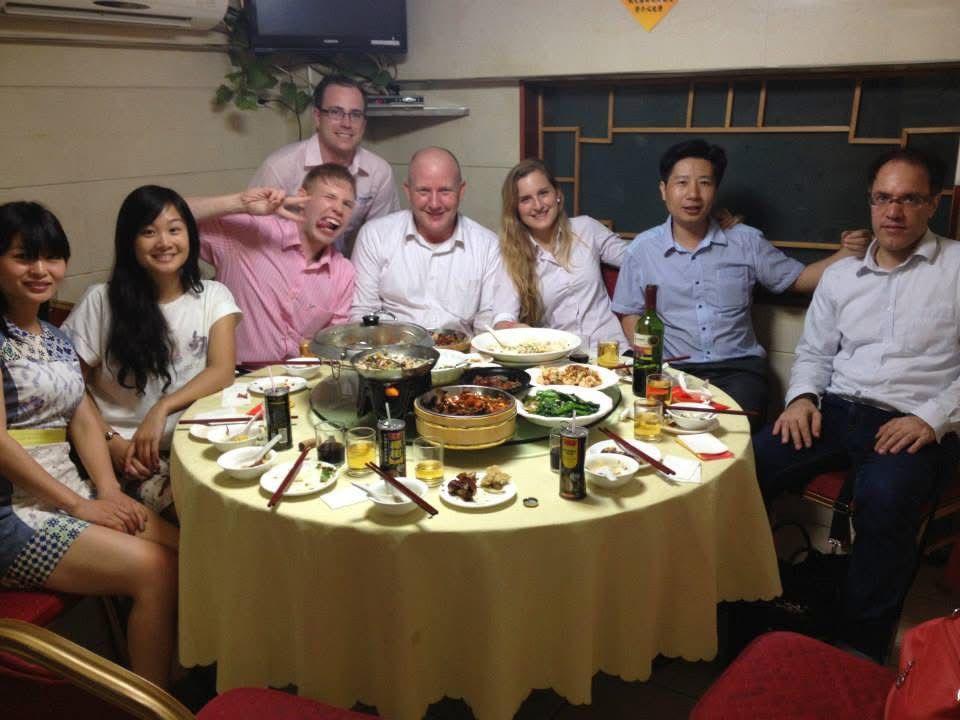
“I didn’t expect it to be this beautiful,” Warren says of arriving in Zacatecas and seeing a side of Mexico manufacturing many Americans don’t picture.
A culture story told through lived experience, grounded in people and place
Birria in Zacatecas arrives in a clay pot, steam rising, meat surrendered to hours of patient heat until it melts into broth the color of rust and sunset. The spices whisper rather than shout. Locals offer it early, the culinary equivalent of saying "this is who we are."
When Warren Pugliano, Program Manager at Eastek International, a US-based contract electronics manufacturer and Entrada client, first tasted birria, he understood the pride baked into it. But his mind drifted to Chinese dumplings. Not the frozen kind. The real ones from five years he’d spent in Dongguan, made by the woman at the small shop near his dormitory. He ordered in Mandarin, watching her hands fold pleats with the same precision he'd later see applied to circuit boards.
That mental ping between two cuisines says more about manufacturing life than any org chart. Food becomes a thread tying disparate chapters together when your office keeps changing time zones.
From a Closed Italian Class to Dongguan
Warren never planned on manufacturing or learning Chinese. Italian was the target, but the class was full. Chinese had an open seat. That's how life pivots, on administrative accidents.
He studied in Beijin, immersed himself in Taiwan's intensive Mandarin programs, and when Eastek interviewed him later, someone cut to the point: "You speak Chinese. That's all we need." No manufacturing background. Just language as a skeleton key to Dongguan.
Five Years Inside a Fully Immersive World
In China, Warren lived on Eastek’s facility grounds. When production called Saturday morning, he was there before the problem compounded. His Hong Kong-based manager didn't speak to him for six months. Later she admitted it was intentional. "I wanted to see if you'd figure it out." Trial by fire, served cold.
The dumpling shop became a place of familiarity, creating tiny moments of competence in days often spent feeling lost. He made friends among the small expat community, bound together by the strange intimacy of being outsiders who chose to stay.
The experience taught him something essential: manufacturing is always personal, always human, even when troubleshooting automated lines.
First Impressions of a New Chapter
When Eastek reached out about Mexico, Warren was ready for something different. Most Americans picture Mexico manufacturing as border cities. Juarez. Nuevo Laredo. Flat horizons. Dry heat.
Zacatecas shattered that assumption. Warren stepped into a high-altitude city where mornings arrive cool and crisp. Hills rise in every direction. Buildings carved from warm cantera stone reveal a UNESCO World Heritage historic center through narrow streets that predate cars by centuries.
"I didn't expect it to be this beautiful," Warren says.
Inside the Mexico Operation
The first thing Warren noticed inside Eastek's Zacatecas facility at Entrada's manufacturing campus wasn't the equipment. It was the greetings. People stop, ask how you are, and wait for the answer.
The contrast with China isn't about better or worse. China's pace had been structured, hierarchical, fast. Mexico's rhythm feels relational, balanced. For Warren, Mexico offered equilibrium.
And then there's lunch.
In Dongguan, lunch was functional. Twenty minutes. Rice box. Back to the line.
In Zacatecas, lunch breathes. People gather. Someone's aunt made tamales. The cafeteria hums with actual conversation, laughter that isn't performance. Food becomes the social lubricant amid long shifts, when hierarchy softens and the line supervisor shares a joke with the new hire.
Warren also notices the universal rhythms: clusters of coworkers catching up before the shift, machinery building into a steady industrial heartbeat, the natural blend where personal life and work life intermingle without apology.
A Company Culture That Stays Consistent
Despite the cultural shifts, Eastek's identity remained steady. The company's strengths traveled from China to Mexico intact. So did the areas for improvement. Customer commitment, problem-solving energy, willingness to take ownership – those showed up in both locations.
This continuity gave Warren stability. Even as language, landscape and latitude changed completely, company culture stayed recognizable. Like finding the same spice in different dishes.

Life Around the Edges of Work
Outside the plant, Zacatecas offers a different daily existence. Evenings arrive cool. The city encourages walking. And almost without planning it, Warren finds himself hunting for dumplings again.
Not to recreate China. Food is how we carry one chapter into the next, the taste memory that helps us understand where we've been. Finding familiar threads in unfamiliar places helps you feel less like navigating foreign territory and more like expanding your map of home.
How People Find Happiness in Extreme Conditions
Warren isn't just surviving these environments. He's choosing them. Manufacturing overseas is physically demanding, culturally disorienting, sometimes lonely. But there's satisfaction in hard-won competence, in solving problems in languages you learned as an adult, in earning respect from coworkers who initially wondered if you'd last.
The happiness comes from connection in unexpected places. The dumpling maker who started packing extra without being asked. The coworkers who invite him to family gatherings. The manager who admits, years later, that the silent treatment was a test you passed.
Food is an entry point. Sharing a meal is the universal human handshake. When Warren eats birria with his colleagues, when he searches for the right dumpling, when he joins the lunchtime gathering – those aren't distractions from work. They're the foundation that makes extreme conditions meaningful. Community forms fastest around tables.
Two Worlds, Both Meaningful
Warren talks about China with genuine fondness. The food was extraordinary. The friendships ran deep. The intensity pushed him further than he knew he could go.
Mexico feels different, not better. It offers room to breathe, space to balance the workday with actual life, a rhythm shaped more by connection than urgency. Both environments taught him that manufacturing success isn't just about processes and yield rates. It's about finding ways to be human in conditions that weren't designed for humans.
Quiet Moments at the End of the Day
As afternoon light settles over the hills and people make their way home, Warren steps out of the plant. He's already thinking about dinner. Maybe birria again. Maybe that new place someone mentioned. Maybe he'll finally find dumplings that taste like Dongguan.
He never expected any of this when he walked into that Chinese class because Italian was full. Not China. Not Mexico. Not manufacturing. Yet each chapter led naturally to the next, carried by culture, opportunity and an openness to finding connection in unlikely places.
In Zacatecas, those threads meet in a way that makes manufacturing feel unmistakably human. The work matters. The quality standards matter. The delivery schedules matter. But the people and culture carry it all. And for Warren, that combination makes this chapter not just a job, but a life. One where happiness doesn't come from avoiding extreme conditions but from discovering that humans build community anywhere, as long as there's food to share and someone willing to wait for your answer when they ask how you are.
Download the
case study
.jpeg)
.jpeg)
.jpeg)
.jpeg)
.jpeg)